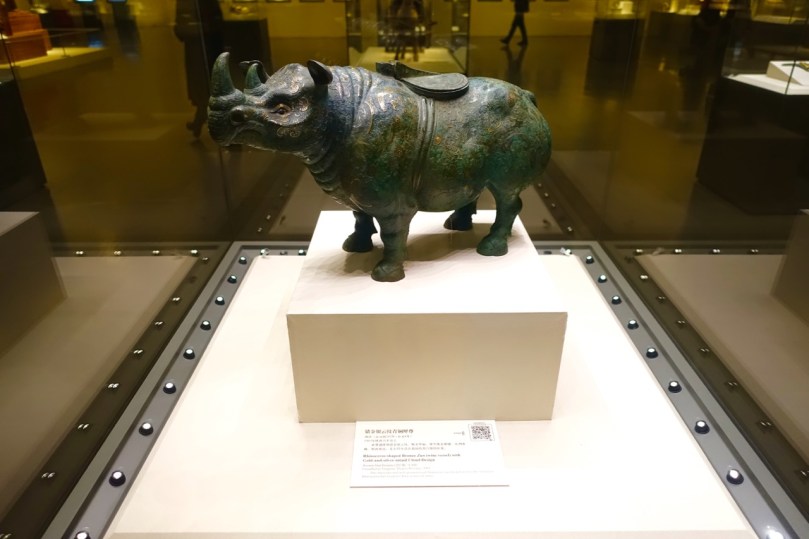
The Capital Museum

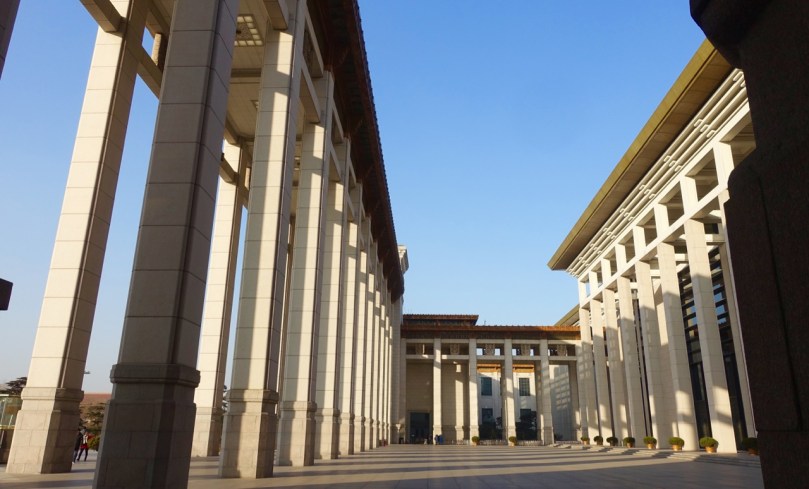
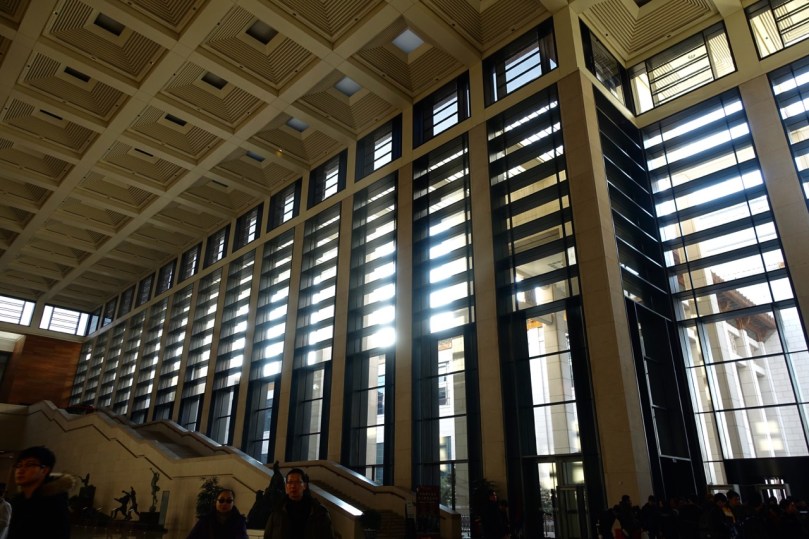
Part of the reason that my mom is now telling everyone how much I love museums is that I did get to visit 2 great museums while I was in Beijing: The National Museum of China and the Capital Museum. While the National Museum is dedicated to the entire history of China and its people, the Capital Museum focuses on Beijing, the capital city, and art.

And as I mentioned before, this is another free museum, so bring your passport and take advantage of the immense amount of art and culture that is available if you have a few hours.

Capital Museum (首都博物馆)
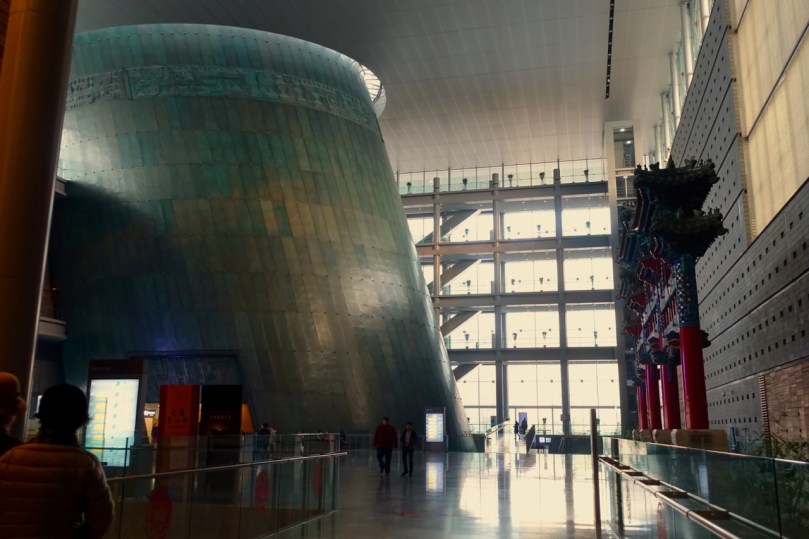
dsc02894

Again, I didn’t take many photos and had a limited amount of time in this museum, but I really enjoyed learning about specific cultural aspects of Beijing and, in turn, China while exploring the Capital Museum.

There was an exhibit on Peking opera that I found really fascinating, a super cool exhibit about Old Beijing and the hutong life that used to thrive in the capital, an exhibit on imperial culture from China’s seat of power, and so many galleries of sculpture, calligraphy, painting, jade, porcelain. Did you know that the Chinese had a system of producing furniture so as to not use a single nail to keep the pieces together?

dsc02889
I loved the snapshot in time here with the double happiness candles and this antique camera
dsc02890
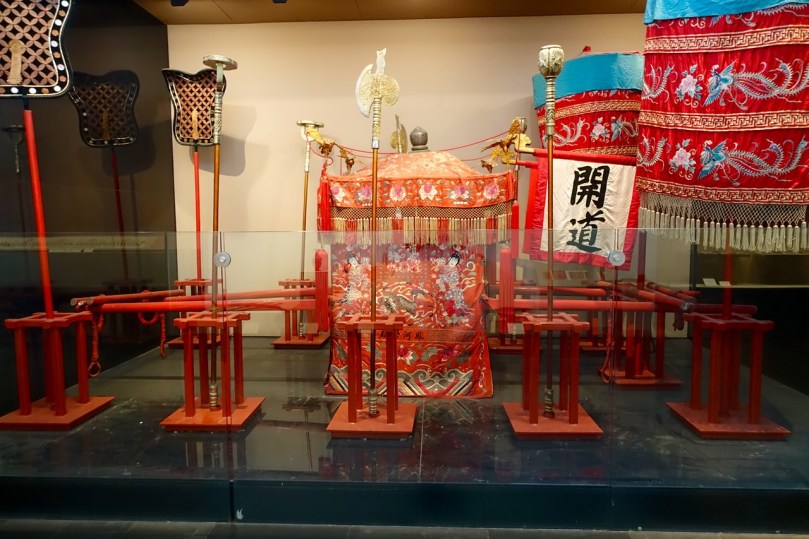
A marriage sedan that I photographed because I was unsure of how long I needed to spend in the “Beijing wedding customs” section of the museum while friends back home kept getting engaged

There was also a temporary exhibit I saw about Tibetan yaks and how important they were to the people of Tibet. My aunts were really excited to see this, as I think the exhibit left shortly after I did, and it’s not something that many people are able to see up close but folks know a bit about it. The size of the skulls and horns that were on display were unreal when you thought about just the sheer size of these beasts and how much a people’s livelihood depended on them.

dsc02891
An example of a yurt
dsc02892
Piles of (fake) yak dung patties that act as fuel

This museum had fewer English placards than the other one, and fewer Chinese ones than I would have expected, but there was a lot of history and art and culture jam-packed into the Capital Museum, and I do recommend a visit if you’d like to learn a bit more about the history and culture and art of Beijing when you visit!

Admission: FREE – citizens need their ID and non-nationals need to bring a passport

Capital Museum


http://en.capitalmuseum.org.cn


What are some aspects of Beijing-specific culture that you’re familiar with? I know a little bit about Peking opera and visited a hutong the last time I was in Beijing but it was cool to learn just a little bit more! I was on the lookout for a big food exhibit but alas, no such luck during my visit!

What other museums in Beijing do you think are worth visiting?
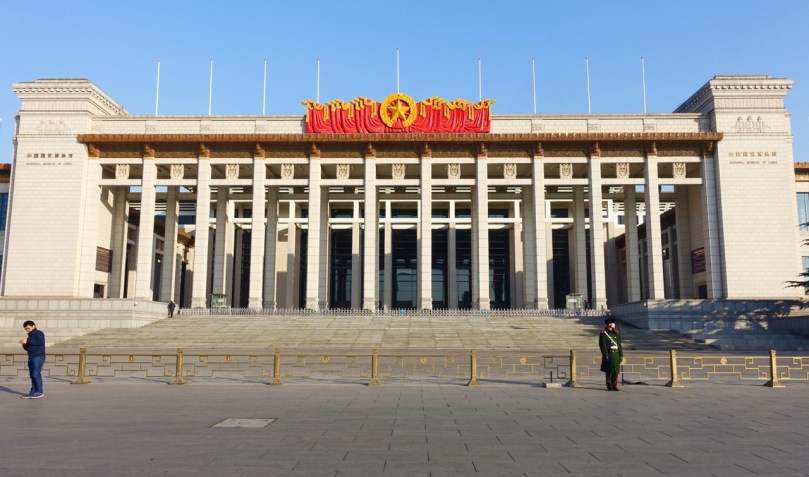
The National Museum of China

Somehow, my mom started telling folks in China that I came to Beijing wanting to just seem the museums!!! Even though I didn’t know about any museums that weren’t the Forbidden City, really. However, as a person who reads every word on every placard in any museum, gallery, aquarium, zoo, what have you, I did really enjoy visiting 2 amazing and free (!!!) museums in Beijing with my aunts. Because I was maybe the only person interested in the exhibits, we didn’t spend an awful lot of time in either museum, so I’ll have to go back someday soon and see the rest! The first one I want to talk about is:

National Museum of China (中国国家博物馆)

dsc02596

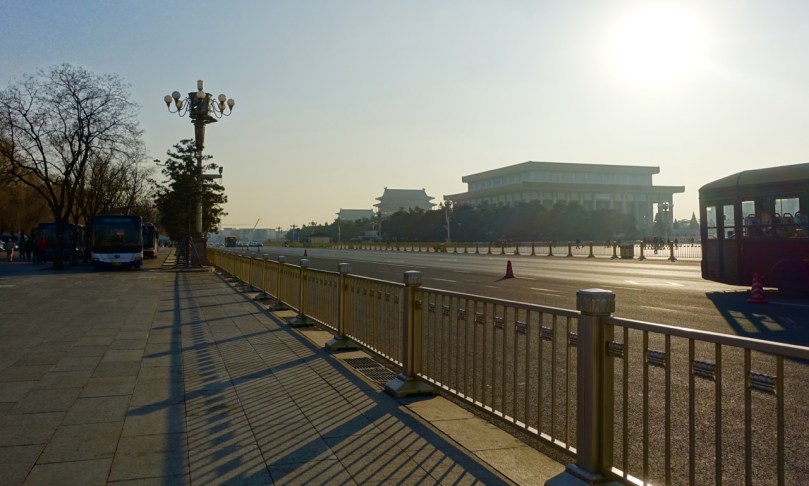
The National Museum (国家博物馆) is an easy stop if you will be visiting Tiananmen Square, as it’s directly across the street, and is a great stop to get an expansive look at China’s history.

dsc02595
View of Tiananmen from the museum
dsc02598
View of Mao Zedong’s mausoleum and other landmarks through the haze

dsc02600dsc02604

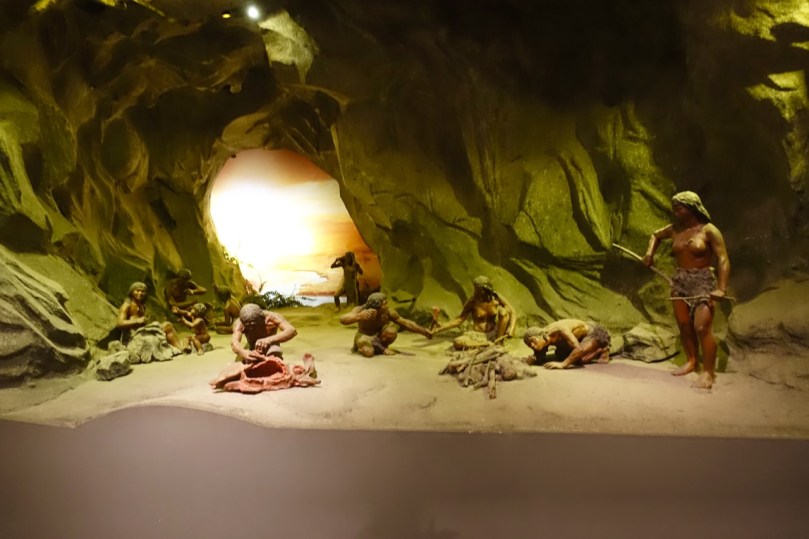
You can start with prehistoric times by looking at the oldest human fossils found in China and go all the way through to the Qing dynasty, the last dynasty before the Communist Revolution.

dsc02606dsc02605

dsc02603
Statues of prominent members of the founding class of the Communist Party of China

While I was able to visit the Forbidden City and its accompanying museum, many imperial artifacts are actually kept here in the National Museum, such as the furniture and accoutrements of the various rooms that would otherwise be left exposed to tourists and the elements.

dsc02608
This is one of the most famous pieces in the entire museum is this Shang dynasty bronze zun with 4 sheep heads

dsc02613

dsc02621
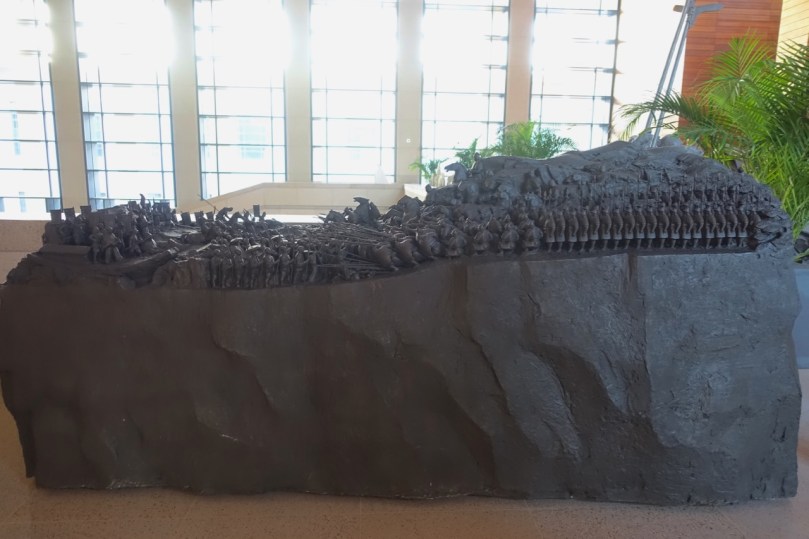
I loved this piece depicting a fierce battle between 2 armies
dsc02623
It was so raw and didn’t hold back with how epic and violent war can be
dsc02619
Another favorite was this depiction of the different tenets of traditional Chinese medicine, including acupuncture and weighing out herbal medicine ingredients the old way

dsc02611

dsc02610
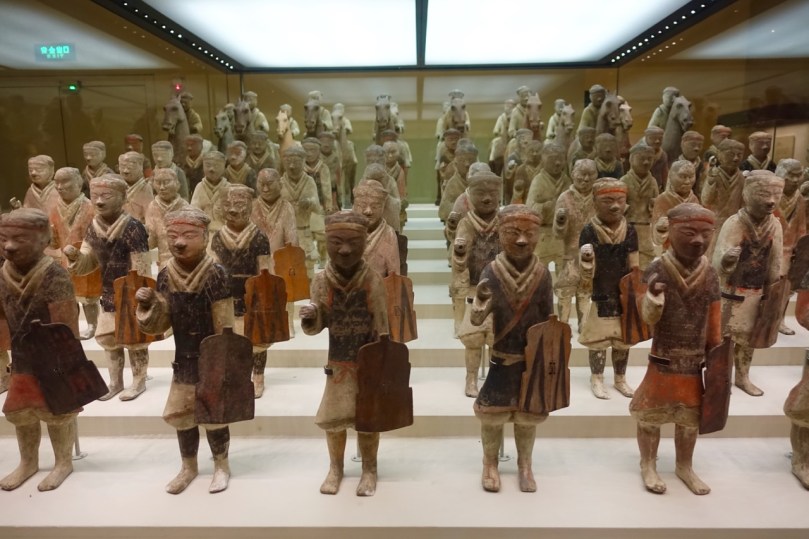
I’ve never seen the Terracotta Army but now I’ve seen 3 members of it

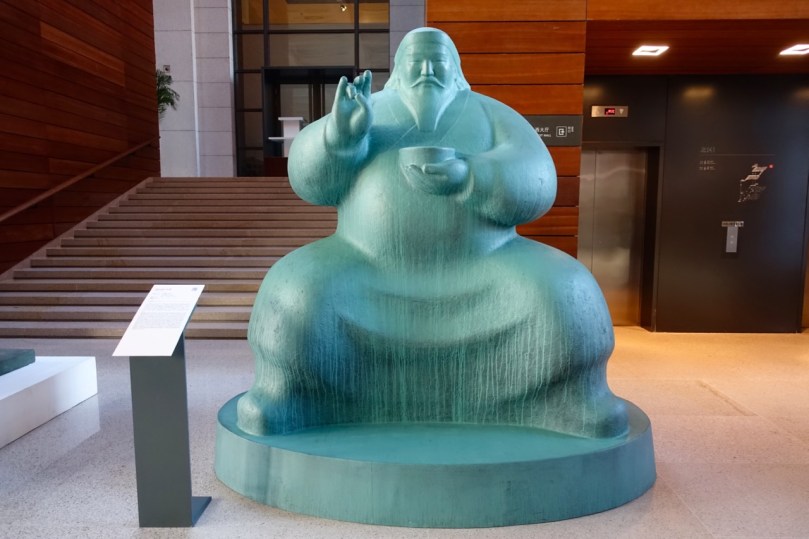
The museum is huge. We only had a few hours and did not get to see all the exhibits, including a waxwork exhibit of key figures in Chinese history. I’m glad we were able to stop by a section that was devoted to statues of important historical people. If you don’t know any important people from China’s history, go up to the top floor of the National Museum and learn about the people who are depicted in statue up there.

dsc02620
Xuanzang, the Buddhist monk whose pursuit of Sanskrit scriptures inspired the famous Chinese novel Journey to the West

dsc02616

dsc02625
Qinshihuang, the first Emperor of China, known for achievements like unifying China and commissioning the Great Wall of China and the Terracotta Army

dsc02624

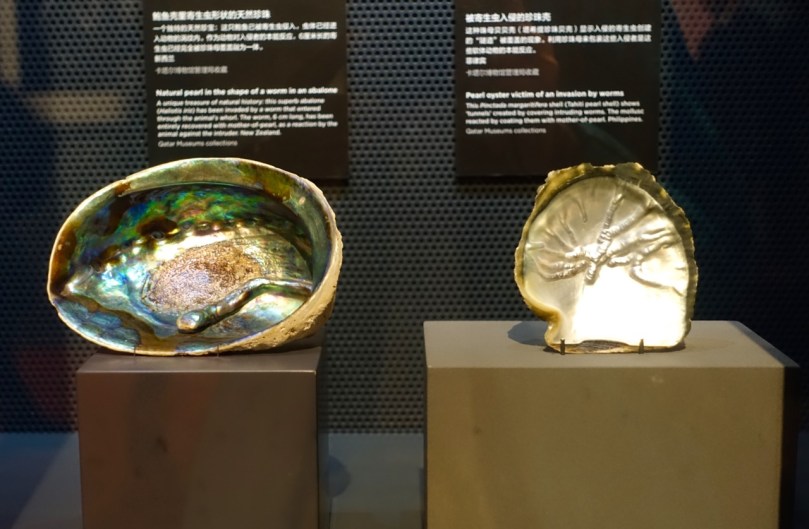
During my visit, there was a collaboration exhibit with the museum and Qatar museums on pearls. They had a lot of stunning pearl work, from intricate pearl beading found in imperial costumes to items from Elizabeth Taylor’s personal collection. They also had really cool items like an oyster shell that trapped a fish beneath layers of mother-of-pearl.

dsc02630
Little fish trapped in mother-of-pearl. Beside this was an X-ray showing its bones
dsc02631
Other creatures have also been unfortunate enough to be trapped beneath an iridescent layer in a mollusk, like these worms
DSC02626.jpg
Salvador Dali’s Ruby Lips and Elizabeth Taylor’s pearl ring

I didn’t take many photos, contrary to how many you see here, because I was furiously reading signs and trying to take in as much information as I could. To think that there were entire wings of the museum that I didn’t get to see, while I was speedwalking through the ones I did get to browse, blows my mind.

I can’t wait to come back and explore the rest of the museum and their new exhibits!

National Museum of China

Admission: FREE – citizens need their ID and non-nationals need to bring a passport
Security: Do not bring large bags, as they will not be permitted. A thorough security check is required before entering the museum, so be prepared to have your bag scanned and to be patted down. Lighters are prohibited, as evidenced by the giant basket of ’em at the security checkpoint. Photos are permitted, as you can see, but not in all exhibits.


What is your favorite history museum? I don’t think I can choose a favorite history museum, since those are my favorites. And really, aren’t all museums history museums? I definitely love when they are free, though! Free access to history is something I really take for granted, as someone who is a hop, skip, and jump away from so many Smithsonian institutions.

How much would you say you know about Chinese history? I know… some. My dad bought me a documentary set that covered literally every era of Chinese history, from prehistoric times through all the dynasties and wars through to the Communist Revolution. A lot of information has since leaked out of my brain, but I try to refresh bits and pieces of it every now and then and this museum visit helped a lot!

Women in Science (2016)

I am a woman.
I am in science.

DSC01485

But you don’t have to be either to appreciate the women who have contributed to our collective body of scientific knowledge! And in fact, it’s important to take time to appreciate them because their work has frequently been trivialized or overshadowed by their male colleagues. I am grateful that we are finally able to give at least some women the recognition for their work.

DSC01486

For example, I’m really thrilled about the new trailer for Hidden Figures (definitely watch this!), which focuses on the black women whose work allowed an American astronaut to complete an orbit around the Earth. Women in Science has a feature on Katherine Johnson (who will be portrayed by Academy nominee Taraji P. Henson) if you’re interested in her story in advance of seeing the film!

DSC01500

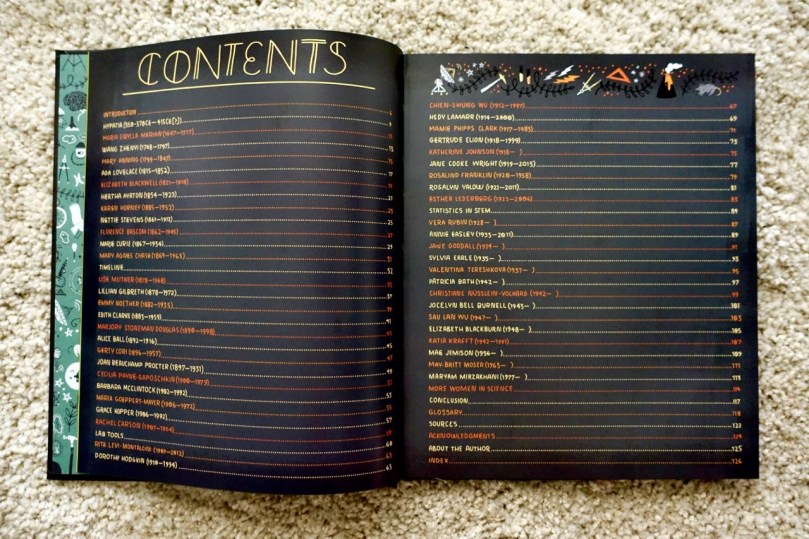
I also liked how informative the book was about science as a whole field. Not only does the author and illustrator talk about each woman and her role in shaping our knowledge of science, but she talks about science itself. You can look at a timeline of events…Read More »

Berlin

Fair warning now: All Europe posts will be photo-heavy. Some photos will be terrible because I took them from a moving bus. Also, I may not quite remember what everything is, but I am trying my best to look it up if I’ve forgotten and to not incorrectly label things.

The first city on our Baltic Capitals tour was Berlin. We had to take a bus from Warnermünde to reach inland Berlin, but the drive was so nice. We went from the rainy harbor on a beautifully scenic view of some of Germany…

One of the buses picking up tourists from Warnermünde to go to Berlin
I learned that, at least in Germany, European McDonald’s have a separate McCafe, akin to a Starbucks.

… before we arrived in front of Charlottenburg Palace.

Schloss Charlottenburg

We didn’t get to go inside, but it is spectacular just judging from its exterior. It’s the largest palace in Berlin and our first taste of this gorgeous city. Quick shout-out to our tour guide, Theo, who is an Australian ex-pat who showed us a wonderful time.

Fun fact: It was a record-high temperature of 37°C (~99°F) in Berlin the day we visited. 

I loved photographing old juxtaposed with the new all over Europe.
Berlin” is a sculpture of a broken chain, meant to symbolise how Berlin was broken by the wall during the Cold War
The Reichstag, or Reichstagsgebäude, with its glass dome so that the people can always see what their government is doing.
My family at the Brandenburg Gate, or Brandenburger Tor  (Wearing black was a poor choice on my part)

What I loved so much about Berlin is how acutely aware the city is of its history. Germans, and especially Berliners, it appeared, really feel the weight of what they’ve done in the past, both good and bad. The incredibly powerful Holocaust memorial, aka Memorial to the Murdered Jews of Europe is one of the testaments of this mindset.

The design is excellent. It resembles a sinking cemetery built on a slope, and it is designed to make you feel uneasy as you walk through. You must pass between the stellae alone, as it is too narrow to allow a friend. You can easily lose your traveling companion at any turn. As you proceed through the memorial, the stellae get taller and taller, and you get swallowed whole by them. It is difficult to determine where the end is, or how close it is, from the center of the memorial. However, the memorial is a topic of controversy because many other groups were targeted during the Holocaust besides the Jews. This was one of the highlights of our tour and I am very grateful that, amidst our rush, Theo made sure we had time to really allow it to sink in.

19-year-old East Berliner Conrad Schumann jumping the Berlin Wall when it was just a low barbed wire fence in the ground, leaving his family behind.
He later committed suicide.
This is one of many pieces of the Berlin wall that has been converted to art.
The most interesting carpark in the world.
Underneath this carpark is where Hitler’s bunker was. The Allied forces found themselves unable to blow up the bunker (as it was… a secure bunker), so they eventually just filled it and now it’s a parking lot.

We had lunch at a place called Hofbräuhaus München, which had a lunch buffet and a live band playing some German folk music when we walked in. It was definitely way too hot for me to be eating German fare (and I don’t really like German food, to be honest). I did try a little bit of beer, since we were in Germany after all, even though I don’t really like beer. I was just glad they served it cold? I think someone told me once he was only served warm beer in Europe. (Also head cheese scares me.) (But pretzels!) The heat persisted but the fun didn’t stop!

The Berlin Cathedral, or Berliner Dom, is a Protestant “cathedral”, although it’s not an actual cathedral since it is not a Catholic institution and has no bishop presiding over it. Regardless, it’s gorgeous.
Altes Museum (“Old Museum”) is next to the Berliner Dom.

The Humboldt Box is a TEMPORARY structure that overlooks the construction site for the rebuilding of the Stadtschloss (Berlin City Palace). The old-looking structure is a little sample of what the finished product will look like. That’s just one little corner. There’s actual quite a bit of debate over whether this is actually worthwhile. Older Berliners want it, a reminder of how Berlin was great, while younger Berliners think Berlin should focus on the future rather than dwell on its history.

“Mother with her Dead Son” by Käthe Kollwitz.
Placed directly under the oculus of the Neue Wache, she is exposed to all of the harsh elements that Berlin throws at her.
She represents the suffering of the civilians during the Second World War. Very powerful sculpture.
A few of the many notable alums of Humboldt University include Otto von Bismarck, Albert Einstein, the Brothers Grimm, Karl Marx, and Erwin Schrödinger.
The famous little stoplight men of East Berlin. (They wear hats!)
Berlin is fighting to keep them, even though most traces of Soviet rule in Berlin have been actively removed.
https://i0.wp.com/upload.wikimedia.org/wikipedia/commons/7/74/Bebelplatz_mit_Mahnmal_B%C3%BCcherverbrennung_Aug_2009.jpg
Photo courtesy of Wikipedia because my own photo of this memorial came out a bit iffy.
This is the Nazi book burning memorial at Bebelplatz, and it depicts a room beneath your feet that contains shelves capable of holding the 20,000 books that the Nazis burned.
“Where they burn books, they will in the end also burn people”
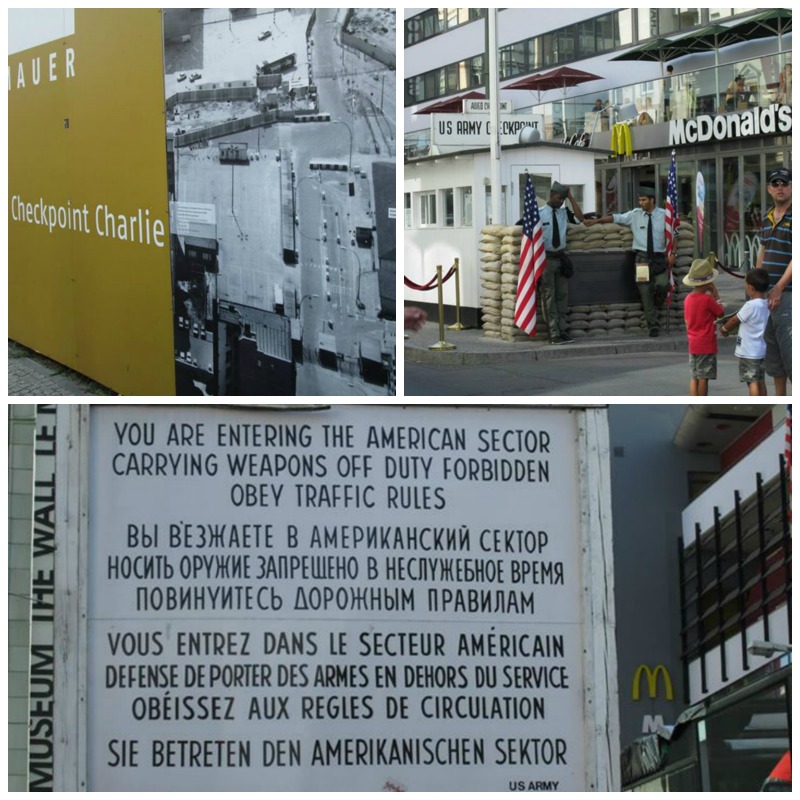
Checkpoint Charlie, with a McDonald’s looming in the background. Very cool though.
Berlin Wall! Fun fact: This part of the Berlin wall was also the location of an SS bunker.
Berlin Victory Column, or Siegessäule, celebrates the then-Prussian victory in the Danish-Prussian War and is topped by Victoria (victory)

I had an amazing time in Berlin. I love how much the city celebrates its rich history but is also very cognizant of its darker ages. With this kind of mindfulness of its past and an incredible optimism for the future, you can’t help but feel excited in Berlin.

Next time: Tallinn, Estonia!

(In case anyone was wondering, collages made for free on PicMonkey, which I also used to edit my Snow White Halloween photo.)