Street of Eternal Happiness (2016)

What do you think about when you think of China? One of the oldest civilizations, China today is full of contradictions. It’s a world power that is still ruled by the Communist Party while seeing incredible wealth and even more incredible poverty. You hear about Chinese tourists bringing shame to a nation of one billion people, remember the incredible displays of sheer manpower during the Olympics, and raise an eyebrow regarding most news stories that come out of the Middle Kingdom.

I have a lot of feelings when I think about China, because it does seem to be in a huge transition, and has been since the Communist Party took over. What I feel even weirder about is the fact that much of what I have learned about China’s modern history has been not from my family who lived through it but from white outsiders like reporters and historians, or through my (white) teachers at school. I didn’t know about the  Cultural Revolution until high school, and it occurred to me that my grandparents were probably reeducated. (They were.) It’s not something that would just come up in casual conversation with my family. Can you imagine a conversation going:

Hey Dad, was grandpa reeducated in the countryside because he was a judge?
Yes, and most of the friends he made died of starvation, along with millions of other Chinese.
Oh. And did you really kill sparrows during the Great Famine?
Yes, all of us children would pile the bodies of the birds. It wasn’t until later that we learned that eliminating sparrows was allowing worse vermin to destroy crops and worsen the famine.

Not really a conversation that just comes up. But I always wondered about how China became what it is today. What’s the context for all of the growth and suffering that occurs in China today? What is the context for everything I see when I go back to visit my family?

Read More »

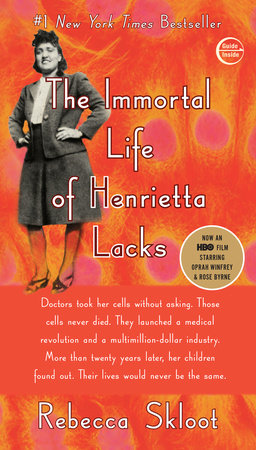
The Immortal Life of Henrietta Lacks (2011)

In college, I taught a colloquium course to incoming freshmen to let them know about the resources and opportunities available to them on- and off-campus. We also encouraged freshmen to read a book that was selected every year to be the freshman book of the year, where we often invited the author and other people affiliated with the book to campus in a series of events.

One of the years that I taught this colloquium, The Immortal Life of Henrietta Lacks was our book. I was really keen on reading it, as a pre-med student who had just started developing an interest in social issues. (I was becoming, as the kids may say, woke.)Alas, while I worked hard to secure copies of the book for all of my students, and encouraged them to see author Rebecca Skloot and relatives of Henrietta Lacks when they were on campus, I never managed to read the book myself. (I gave my copy to a student.) So, I was really glad to have the opportunity to read a book that everyone loved that year and in the years that followed…

Read More »

The Little Paris Bookshop (2016)

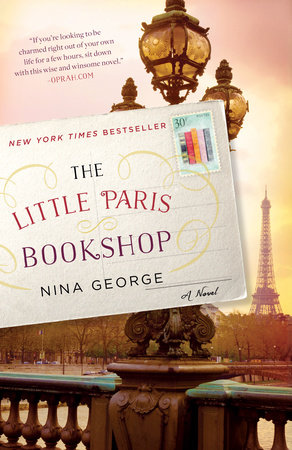
As someone who took French for 6 years in grade school, I cannot resist the draw of a book set in Paris. And the premise of The Little Paris Bookshop really drew me in: a man, who is so intimately familiar with both books and the human condition that he is able to “prescribe” literary medicine to soothe people’s souls, sets out to try to mend his own broken heart. Some of the positive reviews that were already out for the book said it was great for book lovers. Hey, I’m a book lover! And I love France, let’s do this!

Book cover

I am very sad to report that I really had a difficult time finishing this book and I would not recommend it. I have several reasons as to why I disliked this book (with a few spoilers in the elaborations):Read More »

Better Than Before (2015)

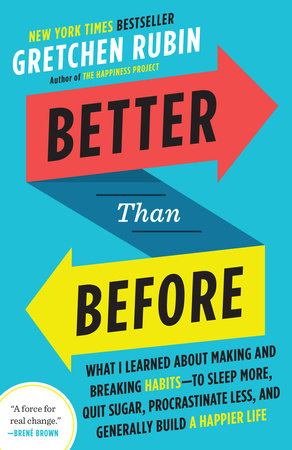
Gretchen Rubin is perhaps best known for her book, The Happiness Project, where she details the little ways you can actively make yourself a happier person. In line with this idea of being mindful and conscious of improving the quality of your life is Better Than Before, which is about habits.

http://images.randomhouse.com/cover/9780385348638?height=450&alt=no_cover_b4b.gif

Why did Rubin focus so much on habits? She talks a lot about how our habits make up who we are, at the end of the day. These are the actions that we do frequently, reliably, dependably. What are we but the sum of our habits, good and bad? Habits are really powerful because good habits help us be the person we want to be and bad ones often are obstacles to us achieving that goal.

I’m going to go into some issues I had with the book before covering what I really liked.

TL;DR – While nothing Rubin says is revolutionary or particularly novel, and her approach to encouraging habits in other people comes off as really pushy, I really admired her thorough investigation and categorization of personality types and how best to form habits for those types.Read More »

The Tsar of Love and Techno (2015)

After reading Christine’s glowing review for Anthony Marra‘s latest, The Tsar of Love and Techno, I immediately requested my own copy to read.

tl;dr Anthony Marra has written some of the most gorgeous prose I’ve ever read, and he has used it to craft a stunningly beautiful story. 

Book cover: The Tsar of Love and Techno | Anthony Marra | New York Times Bestselling Author of A Constellation of Vital Phenomena
Henceforth also to be referred to as TLT for brevity.

Read More »